An AI-powered exam prep platform, built end to end.
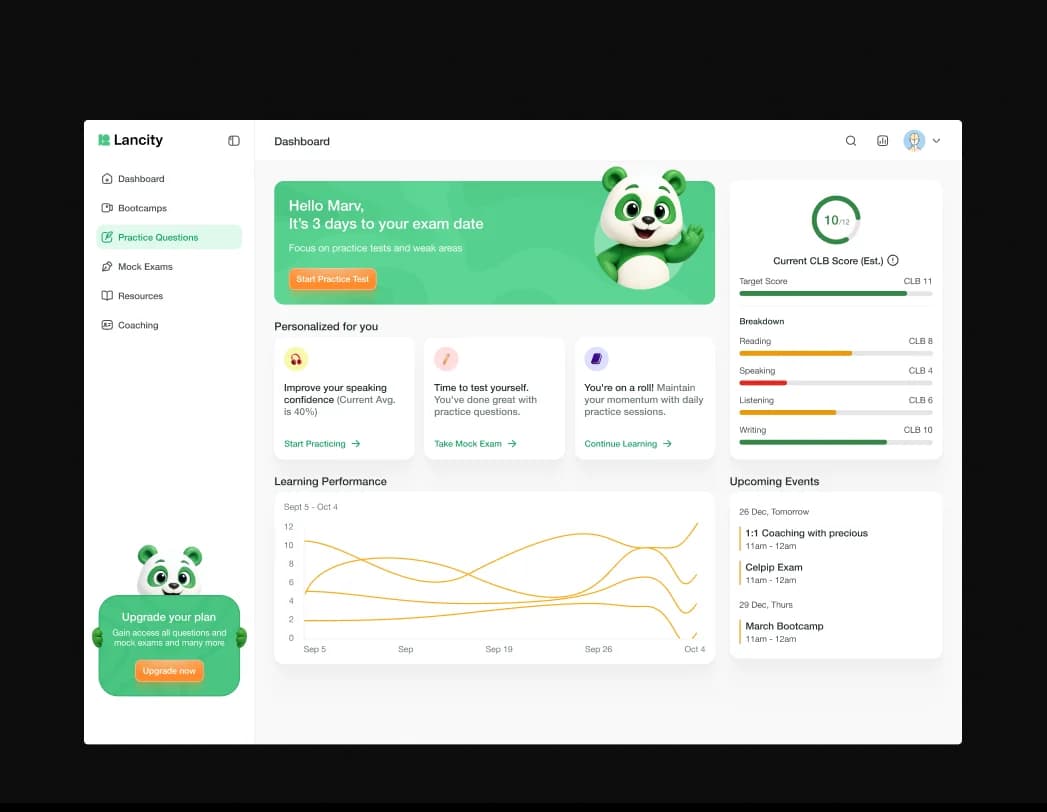
Lancity needed a complete learning system for CELPIP, the English proficiency test that shapes Canadian immigration outcomes. We designed and built the full product: personalized practice, a context-aware AI tutor, mock exams, live bootcamps, and 1-on-1 coaching. Shipped in eight weeks.
Timeline
8 weeks
Service
Products
Scope
Full product
Status
Live
CELPIP is one of two approved English proficiency tests for Canadian immigration: high stakes, high stress, and historically underserved by decent preparation tools. The founder of Lancity saw the gap clearly: a proper platform built around how the test actually works, with an AI that could give the kind of targeted, contextual help that prep books never could. We were brought in to design and build it from scratch.
A high-stakes test with low-quality prep.
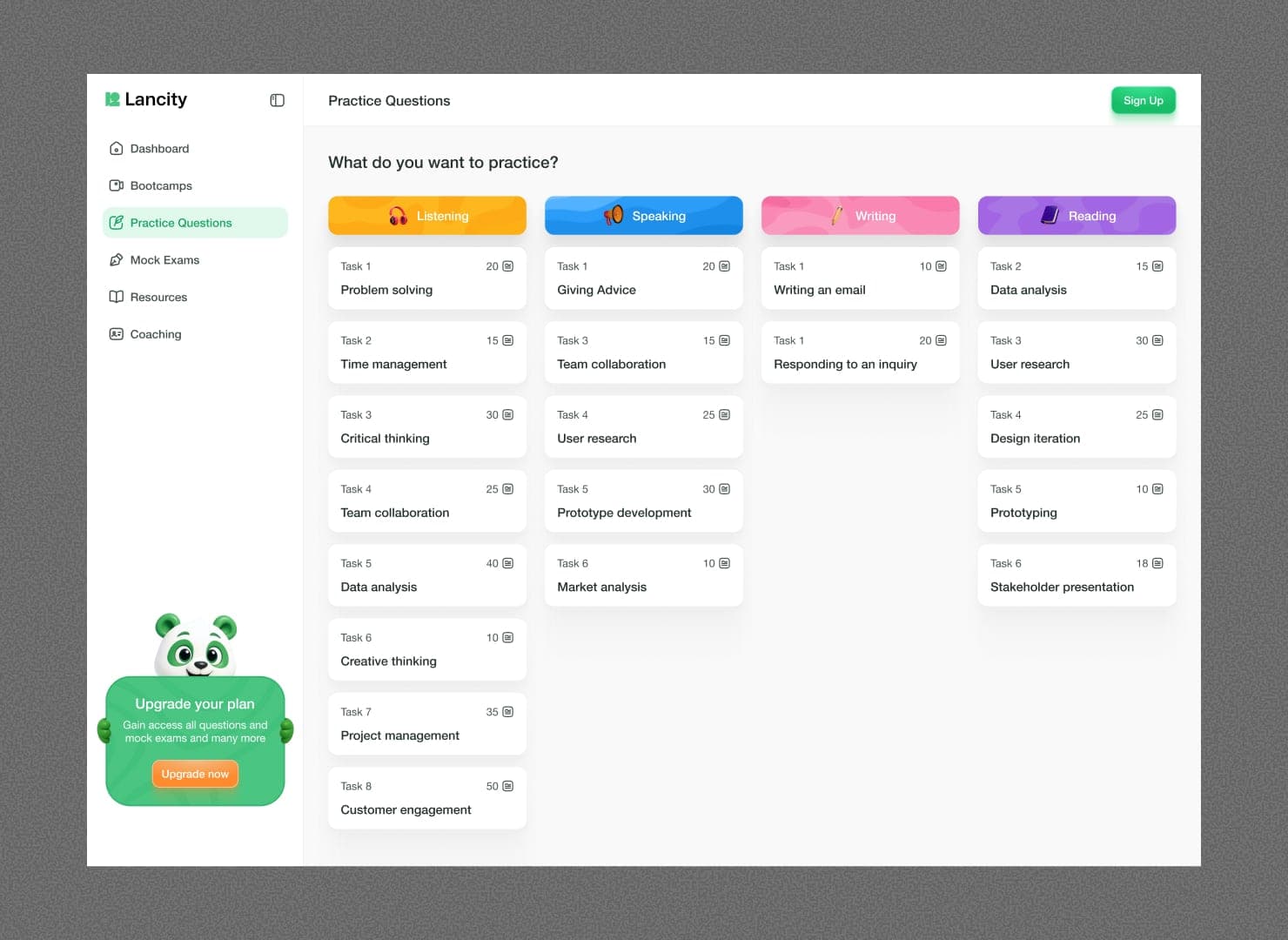
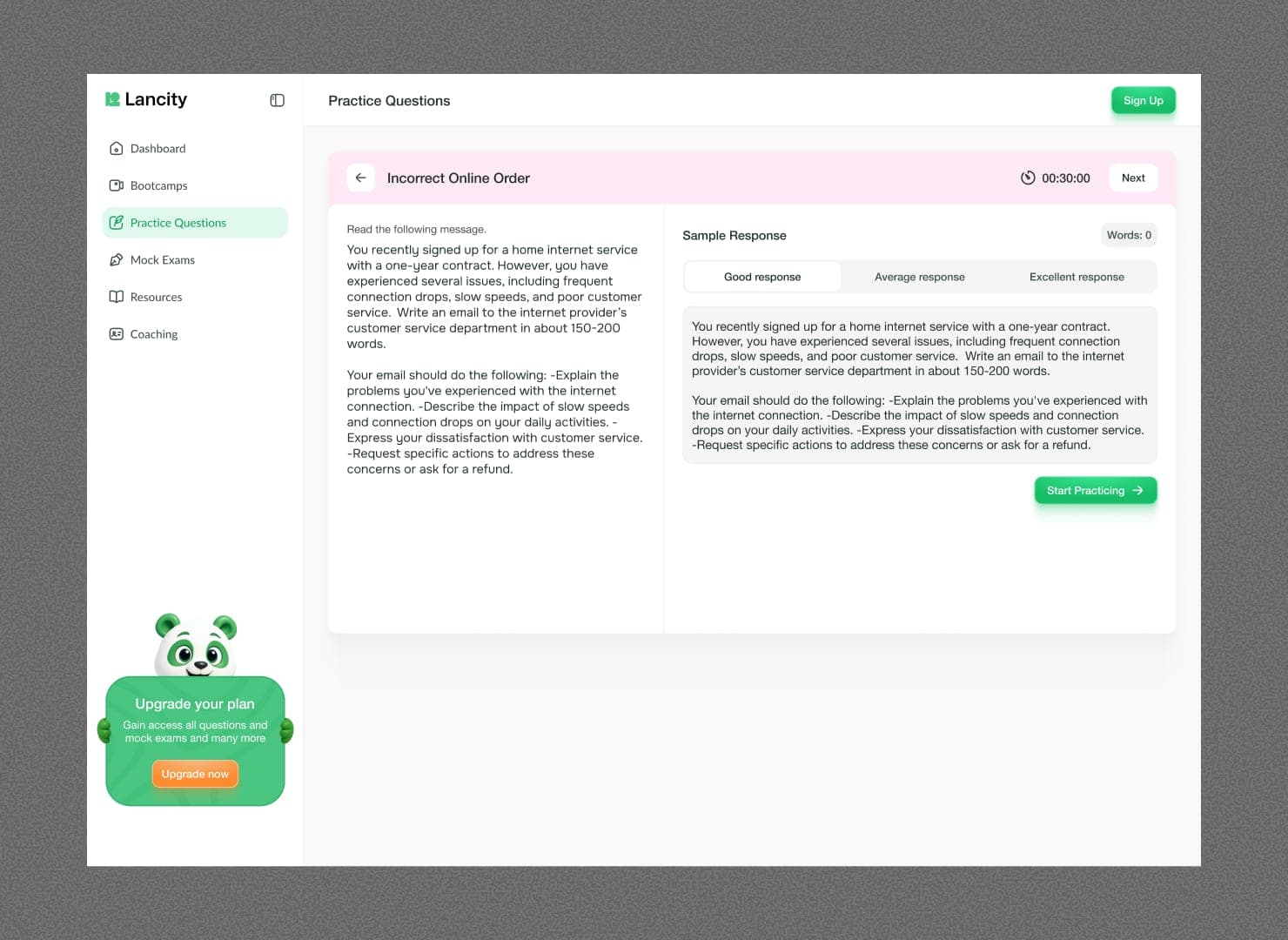
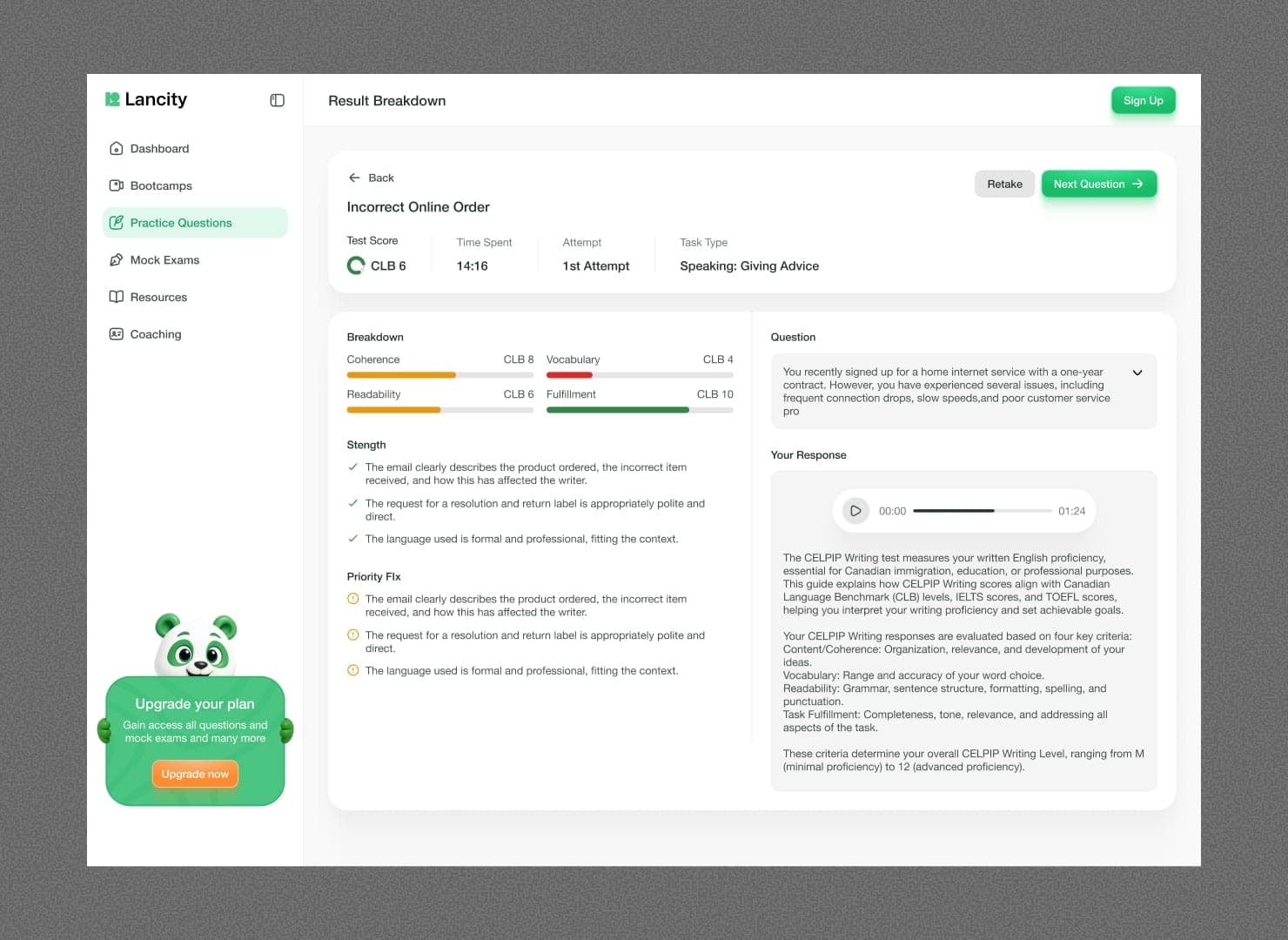
Existing CELPIP preparation was scattered across PDFs, YouTube videos, and generic English-learning apps that weren't built around the test's specific format. Learners had no way to practice all four sections (Listening, Reading, Writing, and Speaking) in one place, track where they were struggling, or get targeted feedback.
The brief wasn't just to build a practice quiz app. It was to build a learning system: something that understood the exam structure, tracked user progress across task types, offered human coaching and group bootcamps alongside the self-study tools, and had an AI layer that could actually help, not just answer with generic advice.
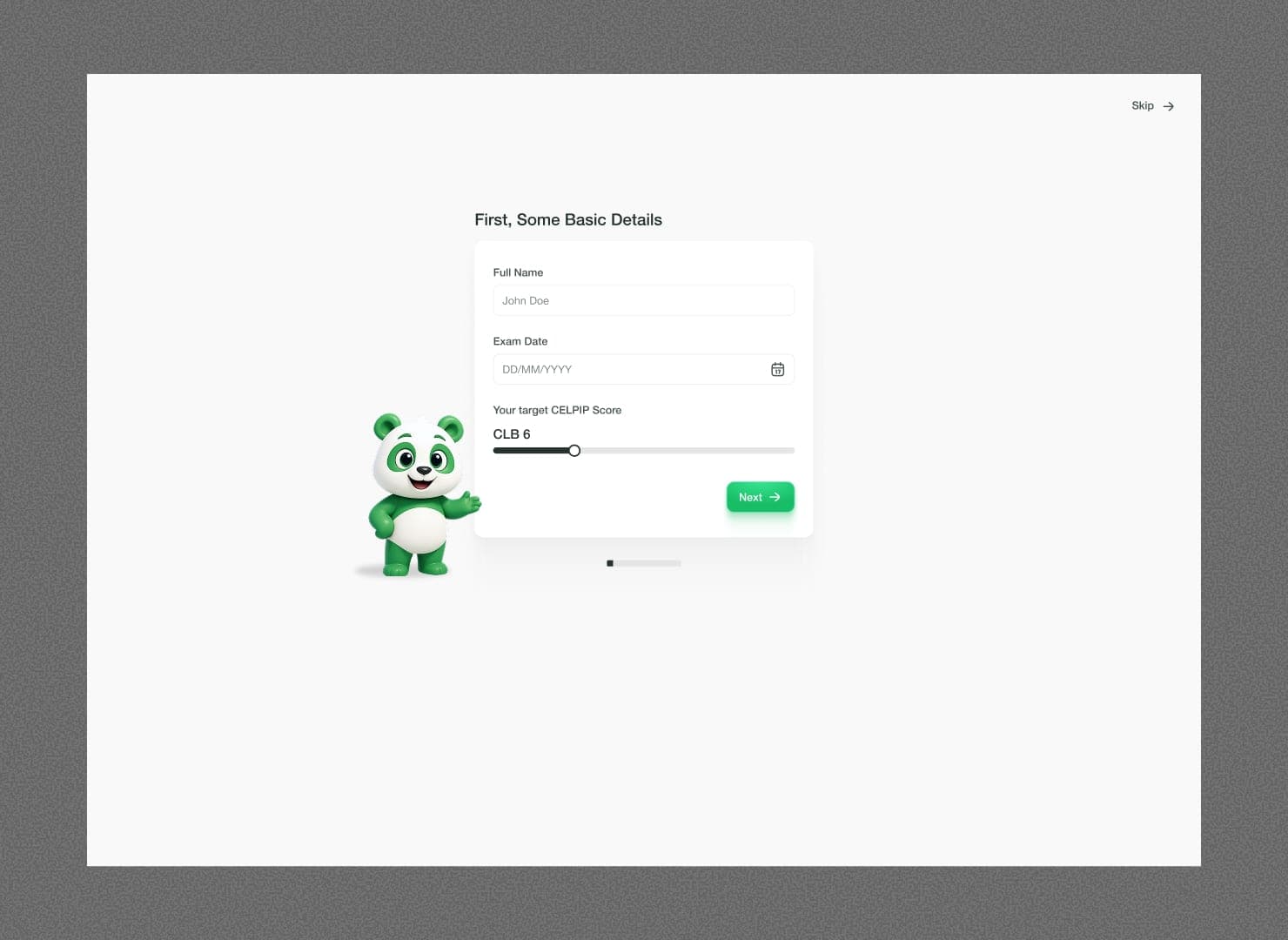
The scope was significant. We needed auth, a subscription model with premium gating, a real admin panel for content management, Stripe for coaching add-ons, Google Calendar for bootcamp scheduling, and an AI tutor trained on the user's context, all shipped and usable within eight weeks.
Architecture first, features second.
Product architecture & feature map
We spent the first week mapping the full exam structure and user learning journey before writing a line of code. CELPIP has four sections, each with multiple task types; getting that hierarchy right determined everything downstream: how questions were stored, how practice sessions worked, how results were surfaced. Bad architecture here would cost weeks later.
Lancy, the AI tutor
The AI assistant wasn't an afterthought. We designed Lancy as a first-class feature: a Claude-powered tutor that knew what section you were on, what you'd just practised, how your scores were trending, and what resources were available. It persists conversation history, understands route context, and can be prompted with goals and study plans. Not a chatbot. A tutor.
Full-stack product build
React, TypeScript, Tailwind, and Supabase for the data layer, a stack we could move fast with without creating debt. We built every feature in priority order: practice sessions and results first, then mock exams, then bootcamps and coaching with Stripe and Google Calendar, then the admin panel. ElevenLabs text-to-speech for listening exercises, TanStack Query for server state, Framer Motion for the interactions that mattered.
Admin, operations & handoff
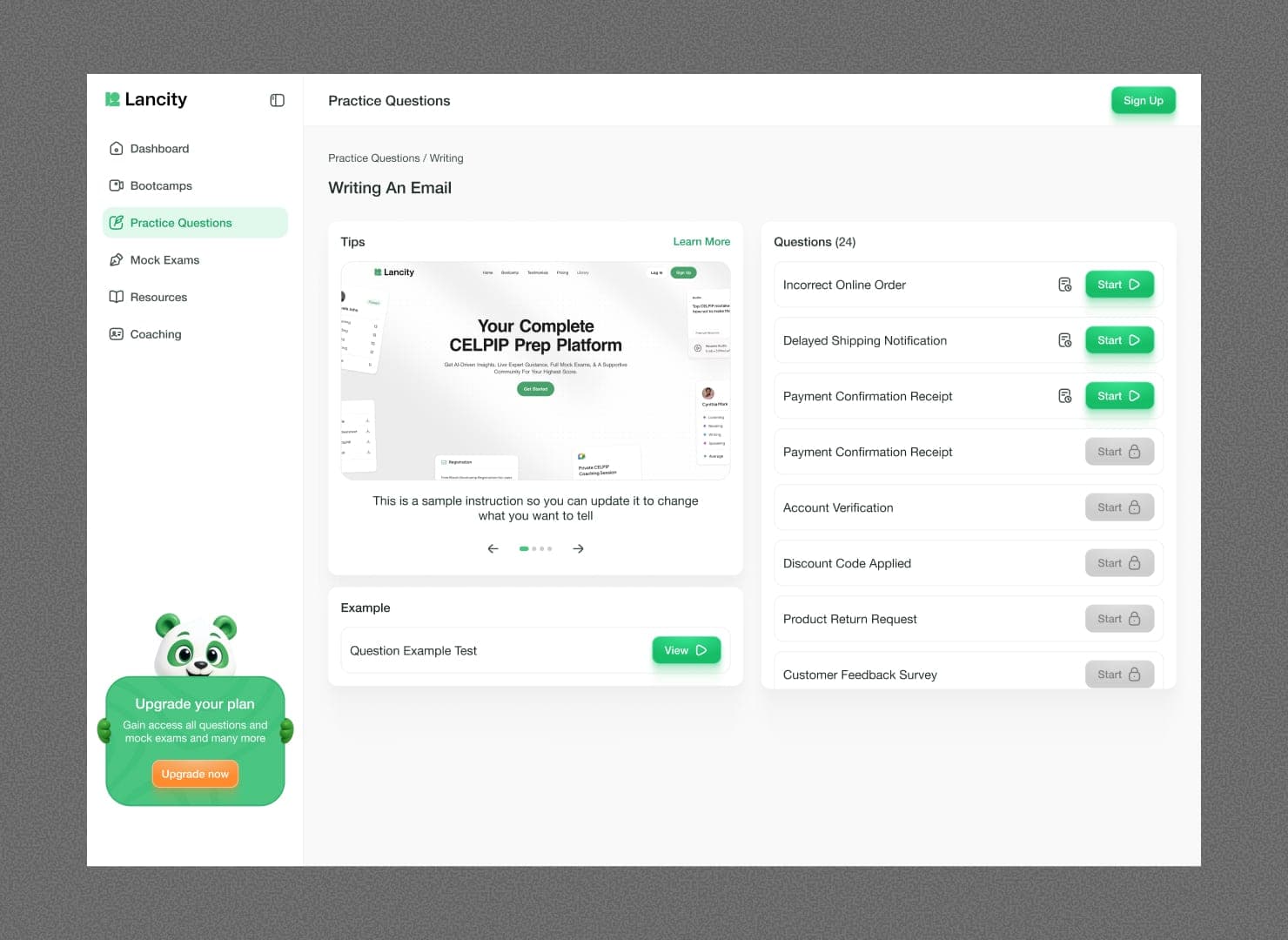
A product like this is only as good as the content inside it. We built a full admin panel so the Lancity team could upload questions by task type, manage bootcamp schedules, configure coaching slots, issue discount codes, and monitor user progress, without touching the codebase. Documentation, a staging environment, and a structured handoff call. They own it.
One product. Five distinct systems, running together.
The complexity here was in the surface area: practice, exams, coaching, bootcamps, AI, payments, and admin all needed to work as one coherent product, not a collection of features bolted together. Every system has its own data model, its own state, and its own edge cases. The design kept them visually unified while the architecture kept them independently maintainable.
A complete product, not just a prototype.
Lancity launched to their waiting list on schedule. The founder runs content and coaching through the admin panel without any technical support. Lancy has handled thousands of learner queries since launch, and the platform's bootcamp and coaching features drove early revenue within the first two weeks of going live.
“We had a clear product vision but no technical team. V1 turned it into a real, working platform: AI tutor, payments, admin, everything, in eight weeks. It feels like a product we built for years, not one we launched in two months.”
Lancity Founder
Lancity